

|
|||
















 Southern California beach conditions









.gif)




























 A trademark voice of radio and
commercials, Kris Erik
Stevens delivers. Always
energetic, always positive and always a friend. Visit him
here
A trademark voice of radio and
commercials, Kris Erik
Stevens delivers. Always
energetic, always positive and always a friend. Visit him
here






�I Love L.A.�
1976-1982
�Hey Glen, give me a ride!� I yelled out as the driver loaded the luggage of the superstar into a gleaming white limousine.
It was after midnight and I had just completed an exhausting consulting trip and certainly didn�t feel up to the task of locating a taxi willing to transport me to my home because they didn�t like the going to the valley where they would be left without a return fare to the airport.
Following a five-hour flight from Boston my legs were drained of any strength for standing and a pain medication had done little to make the trip bearable. Using a cane helped steady my walk and on most flights I stood in the back of the plane. These consulting trips usually ended with my being laid up in bed for a day or two before David and Clifford lifted me into the back of the family station wagon where I�d lay moaning in pain while being transported to the doctor.
�Where you heading� he asked.
�The valley side of Coldwater Canyon�just down from your place,� I replied.
�Hop in pal,� were just the words I needed to hear.
As program director of WLS I had met Glen Campbell a few years earlier when his weekly CBS �Goodtime Hour� TV show and his hit single �Wichita Lineman� were both #1.
I really didn�t expect him to remember me and thought my cane may have prompted his act of compassion more than any memory of our Chicago meeting.
�John Rook,� I said offering my hand to shake.
�Howdy partner,� he said in that trademark voice as he slid over in the rear seat, directing the driver to load my baggage in the trunk.
�You still working in Chicago?� he asked, indicating our previous meeting had indeed rendered an impression. I explained California was now home and as I began to make small talk about radio he yawned, hunkered down in his seat, closed his eyes and fell asleep.
Pulling up to his hillside home overlooking the valley, he opened his door and stumbled out half asleep before turning to nod goodbye and telling the driver, �take him wherever he wants�.
Just a few hours later the non-stop ringing of the telephone woke me.
�John, this is Biggie Nevins at KFI, did I get you up?�
Explaining I had just returned from a three week trip in the east, he interrupted, �Chuck Blore suggested I give you a call, when can we get together?�
We scheduled a meeting for the following day at KFI�s offices on Ardmore Avenue in the Wilshire district of Los Angeles.
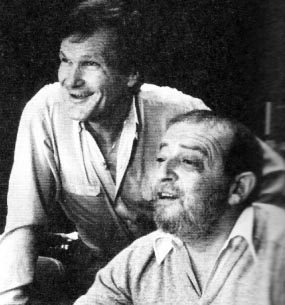
Chuck Blore and Don Richman
So often a recommendation from Chuck Blore brought opportunies in my career. Years earlier I would spend hours talking with, listening too and marveling at the genius of both Chuck and his partner, Don Richman. It was pure joy and excitement watching them give birth too and create an advertising campaign. They taught me to "think outside the box".
KFI, at 640 on AM dial in Los Angeles is known as the nation�s most powerful radio station. Listeners from Hawaii to New York and Canada to Mexico for years tuned in to hear Dodger games exclusively on the station. The premium facility had been sold to Cox Communications of Atlanta for a record breaking $15 million cash in 1973, then the highest price ever paid for a radio station.
Biggie explained he had been a Cox employee for at least a dozen years at WIOD in Miami and along with Jim Wesley, the manager of the Florida station, had been transferred west to establish a Cox presence in southern California.
In the weeks preceding the transfer of the station, Peter O�Malley had already decided to move the Dodger games from KFI to a new flagship, KABC, who would supplement KFI�s vast single station coverage with a network of stations that would deliver more revenue to the Dodgers.
Arriving at KFI, Jim Wesley politely listened to the Dodger heir, refusing to be muscled by O�Malley, he simply wished the Dodgers well in their new home. Referred to by some as �the man who lost the Dodgers�, Wesley always maintained his decision was correct, but KABC now claimed the top rung in the Los Angeles ratings and led the entire nation in delivering the most revenue. He may have lost baseball, but Wesley was busy trying to add another gem to the Cox treasure chest as he went shopping for a sister fm station.
Wesley remembers, �KOST was purchased for $2.2 million. I contacted Gordon McLendon by telephone when I heard from our Washington attorneys that he wanted to sell. We had been trying to make a deal for an FM station in Los Angeles for several months. I had met with several owners but could not reach an agreement. In our first telephone conversation Gordon told me what he wanted for the station and we agreed on the deal during a second telephone call which I made late in the evening from my kitchen at home in Woodland Hills to Gordon in London. He was on his way to an international conference of economists. Gordon and I met with our attorneys in Washington a few days later to work out the details of the purchase agreement. It was a quick and very pleasant negotiation. He was a brilliant businessman and a delight to work with. He was one of the most charming and creative men I have ever met. He talked a lot about the development of his various formats, and although he was in the process of moving out of radio he continued to think about new ideas for the medium and for television. I had hoped to see him again at the closing at his office in Dallas but he was ill that day and we worked with his lawyer. I never had the pleasure of talking with him again.�
Like KFI, Cox was said to have overpaid for KOST too. But in the years ahead it would deliver 2.2 million in a single month to the company coffers.
Without baseball KFI�s talk format did not attract the demographics advertiser�s paid top dollar for. Biggie stressed the need for a younger audience was paramount if KFI were to deliver the advertising revenue needed to �pay off this enormous debt�.
A talk format would take years to develop and a major commitment in dollars. �Atlanta expects us to make money - not spend it� Biggie emphasized as he explained the Cox home office had grown impatient to taste a larger slice of LA�s annual advertising bonanza of $150 million. A paltry sum compared to the one billion dollars plus annually forked over by advertisers to reach southern California radio listeners nowadays.
�What would you do with this facility?� Biggie asked.
�Damn near anything you want� I said, referring to KFI�s massive 50,000 watt signal at 640 on the dial.
We reasoned the departure of programming genius� Bill Drake and Ron Jacobs from KHJ signaled the end of RKO Radio�s reign of success. FM was not yet the band of choice for most radio listeners and AM stereo was trumpeted as being more superior to that of FM.
Meanwhile, the music industry was supplying a healthy menu of �mass appeal� music. The hard rock and roll of an earlier generation had matured to provide Barbra Streisand, Abba, Glen Campbell, Kenny Rogers, Fleetwood Mac, The Eagles, Steve Miller Band, Bee Gee�s, Stevie Wonder and Barry Manilow. Hardly the dreaded �rock� Biggie explained his Atlanta masters would have a hard time accepting. I explained that while at ABC I learned how much easier it was to attract audience and create revenue selling music programming, talk was much more difficult. In these years before the lifting of the fairness doctrine by the FCC, controversy on talk radio was milk toast compared to the antics of today�s talkers. Without the magnet of baseball on a regular basis, most talk stations attracted only an audience of senior citizens.
�We�ll just call it what it is�, said Biggie. �Mass Appeal,� adding, �Until you walked into the room I only knew how to spell KMPC and KABC.
Pulling research from a desk drawer, Biggie rose to close his office door, explaining I was about to receive �privileged information� about the state of KFI. The once proud market giant had gone into a tail spin following the departure of the Dodgers and research indicated even Lohman & Barkley audience in decline. �Well, it�s either talk, news or music�, said Biggie,
�Dragging this dinosaur kicking and screaming into the twentieth century isn�t going to be easy, are you sure you�re up to it?� he asked.
All I ever wanted in my entire radio career was to live and work in southern California. A previous offer to program at RKO was now a distant memory and I was glad I had decided against it.
�When do we start?� I asked offering a handshake.
�NOW!� he said, reaching for my hand.
We came to an agreement on specifics of my employment and Biggie suggested I �take just a few minutes� to meet with Jim Wesley in his giant manager�s office which because of it�s size, was referred to as �Pauley Pavilion,� after the UCLA basketball arena.
�It�s just a courtesy; he�ll go along with my decision.� Biggie cautioned not to divulge my thoughts concerning KHJ.
�Lest Jim have a heart attack.�
Wesley�s secretary buzzed my arrival and he graciously opened the door inviting me into his office. A mild man of smiles and southern charm, Jim Wesley was indeed a gentle man.
It was a large office, though hardly the size of the UCLA basketball court. Wesley�s desk was absent of any paperwork except for a magazine that seemed placed solely for decorative purposes.
�I leave the programming to programmers� he said and within a short period of time he was satisfied with my less than revealing plans for programming.
�I still have a few coupons to clip in the home office�just don�t embarrass me.�
Wesley had little communication with talent and that�s the way he liked it. He was "management" and he never forgot it.
�It�s your job to control those animals,� he said. His introduction to west coast talent had not been comfortable when Lohman and Barkley, upset over the loss of the Dodgers, held Jim accountable. They both told me how �Wesley was never on the same page�, with them. Aiming his displeasure at KFI�s new owners, I recall Roger arching his eyebrow in disdain for �how those clowns from Atlanta ruined this station�.
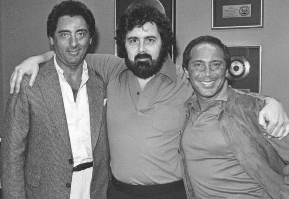
Bob Skaff, John Rook, Paul Anka
Among the first to drop by KFI and wish me luck were two long time pal's Bob Skaff and Paul Anka. Even today more than forty years we are still friends. Paul continues to entertain Vegas and Skaff is retired in his old home town of Cleveland.
Elliott Nevins size afforded him the perfect nickname -�Biggie�. A bearded immense man of size who could easily double for the legendary opera star Luciano Pavarotti, we soon became very good friends. In our years at KFI, we seldom had a disagreement. The beach at his home in the exclusive Malibu Colony was a great �hatching� ground for programming ideas and concepts. It�s where we invented a short lived �double your pleasure� programming concept calling for a team of talents in each KFI time slot. Lohman & Barkley, Tim & Ev and Byron & Tanaka occupied the major day parts before �top� management decided we really didn�t need to have all that talent, �anyone can play records�.
Biggie felt certain Lohman and Barkley�s appeal could spread to a younger audience. A very good judge of talent, it was Biggie who discovered and gave the industry Larry King and Sally Jessy Raphael while at WIOD.

"Sweet Dick" Whittington
I had never met Sweet Dick Whittington but had been a fan of his since I first heard him years earlier on a small valley radio station, KGIL. It didn�t surprise me when he moved up to KFI. Within my first day or two, virtually all of the station�s talent, Hilly Rose, Ron McCoy, Larry Van Nuys, Morgan Williams, Bruce Wayne, Lohman and Barkley, came by my office to introduce themselves.
Everyone that is - except Sweet Dick.
He ignored my requests for a simple introduction, a sad reminiscent of an earlier experience with Dick Biondi, who bolted from WCFL without even meeting me upon learning I had hired Larry LuJack from rival WLS. Remembering that experience, I took the time to write a note to Whittington letting him know how much I looked forward to meeting and working with him. But there was still no response from my afternoon star.
By the end of a week, I left a final note explaining I would appreciate it if he could drop by for a quick hello before his show. I waited for a response or perhaps a phone call suggesting a more convenient time. I nervously glanced at the clock and noticed it was ticking down to just a few minutes before Sweet Dick�s airtime. Biggie stuck his head in my door asking, �no sweet dick yet?� �Unfortunately not�, I said, rising from behind my desk. I decided the time had come to meet my evasive charge at the studio door. Luckily Bob Shannon was standing by to fill in for a few minutes as I positioned myself at the studio door to greet Dick.
At the last second, bounding up the steps to the studio came Sweet Dick as he looked up to see me offering my hand to shake in introduction. �I don�t have time now,� he said reaching for the studio door.
�Sure you do Dick,� I said explaining Shannon would be covering his opening minutes on the air. Like a volcano he stormed out of the station vowing never to return as long as I was program director.
Almost a dozen years passed before Sweet Dick and I actually met again at KABC where we buried the hatchet from earlier days in the ashes of the past.
While I was programming KFI, my brother Charles Rowe was over at KTTV, channel 11 anchoring the nightly news for Metromedia. He had followed me out to Los Angeles from Chicago where he anchored the news for WLS TV and I was program director of WLS radio. As folks began to learn we were brothers the question always asked, �if he�s your brother, how come his name is Rowe and yours is Rook�. Twenty years earlier Charles had been asked a similar question when upon returning from the Navy he discovered his younger brother John Rook had become Johnny Rowe�disc jockey and program director at KOBH in Hot Springs, South Dakota. Charles would start his broadcasting career when I hired him as a weekend dj at KOBH with a name change to Rowe.
A few years later I was hired as program director of KQV in Pittsburgh, where as a member of management I was no longer a dj. The name Johnny Rowe was dropped as I returned to my real name John Rook. Charles, now a TV personaltiy continued with the air name I gave him all those years ago..."Rowe."
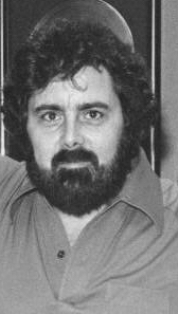
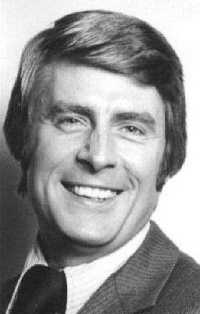
John Rook - 1977 Charles Rowe Rook - 1977
While I doubted he could be persuaded to return to southern California, Biggie insisted I talk to Larry LuJack in hopes of bringing him to KFI to replace Sweet Dick. I explained Larry had never been enamored with southern California since his days as a baby jock in San Bernardino. I was right. Larry vowed to make Chicago his radio home for the remainder of his career. �Don�t plan on ol� Lar headin� out that way,� he said. I wasn�t overly concerned, we were fortunate to have Bob Shannon and Dave Diamond on staff to begin our first exploratory steps for 64/KFI.
I have long believed Lohman and Barkley were the best morning radio duo of all time. The humor they created was spontaneous, ending only when Al decided it should. Roger was a perfect straight man for Al�s creativity. I had known them both from our days in Denver, Roger was program director of KIMN and Al was a disc jockey.
Roger Barkley was furious when he heard the news of Sweet Dick�s departure from KFI. Barging into my office dragging a reluctant Al with him, Roger threatened, �Maybe you�d like to have us walk out too?�
Al immediately brought some humor to the situation when he questioned in his best Lone Ranger voice, �Are you speaking for me too Tonto?�
This was the start of a friendship with Al that would keep me in hysterical laughter for the rest of his life. Lum & Abner, a radio keepsake of years earlier lived on during our frequent telephone conversations that began with Al inquiring, �is that you Lum?�
Roger, considered as �distant� by many, marched to his own drum. Not a �team� player, he seldom had time for conversations with other talent. Al was the opposite, available for all and did much to inspire other talent.
Together they created brilliant comedy in the same vain one of their fans, Johnny Carson, did for television. Most of the program was �off the cuff� of Al Lohman who never used notes or a script. As the straight guy, Roger simply followed along with the listeners to hear where Al was leading them. They were brilliant together, separated the magic was gone. I argued in vain for them to receive a financial reward commensurate with other radio stars of that era. They never did.
Bruce Wayne, known as the �KF-eye in the sky� was as much a part of �The Lohman and Barkley� as Al�s characters, Maynard Farmer, Leonard-Leonard, Dr. Corwin Chester Sternhill and �W� herself. Bruce�s experience as an ace pilot in the Korean War prepared him for the daily dodge in the crowded skies of Los Angeles as he provided traffic information. His preference of a fixed wing aircraft over a helicopter �because you have a better chance getting down in an emergency,� haunted me a few years later on a June day in 1986. Bruce Wayne was killed when his orange Cessna crashed on takeoff from the Fullerton airport. His tragic death triggered the same for KFI�s manager, who collapsed and died of a heart attack upon hearing the news.
Luckily, Bob Shannon was on staff, his previous experience qualified him to work virtually any shift on the station. Another seasoned pro, Dave Diamond, was also available. Talk or music, he and Shannon could do the job so I breathed easier in those early days at KFI. They joined Biggie in understanding where we were heading.
Any welcome I received at KFI was limited as the sales staff was openly defiant to any change in programming.
�They can�t sell what they now have, but they don�t want it to change,� a miffed Biggie reasoned.
One of the sales staff, Earl Kramer, actually entered my office challenging me to a fist fight, �for screwing up this station�. My thanking him for the compliment only increased his rage, but before long �Earl the Pearl� became a friend and would continue to be until his recent passing. In the years ahead he would switch to KABC sales and I was surprised when he didn�t show up to welcome me for a full week. �I thought I�d see how long it would take you to screw up KABC� he joked hugging me.
KFI�s sales manager was a twitchy fellow who never seemed able to look me in the eye. His nickname, �the Duck,� came from a strange habit of quacking like a duck each time an account executive successfully delivered much needed revenue. He explained with pride the name was given him by associates at KMPC, an earlier job. As operations manager, Biggie handled all communication between programming and sales. He fought long and hard to keep commercial loads competitive, but seldom won. �Selling music radio is like stealing�, said the Duck proudly strutting from Biggies office after announcing how he had �stolen� advertising revenue previously meant for KHJ. �It�s called �transom selling� said Biggie. �Transom selling?� I asked wondering what new sales technique had passed me by. �It�s coming in over the transom� he said, explaining how advertising agencies had become much more supportive of KFI�s �Mass Appeal� format and the stations superior coverage.
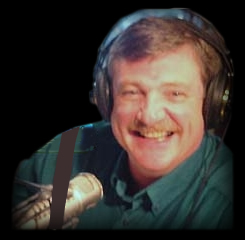
Jack Armstrong
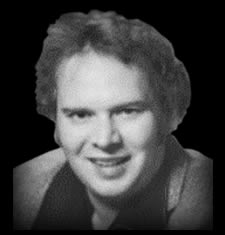
Big Ron O'Brien
Always on the lookout for new and exciting talent, In the early 70's I was excited upon hearing a tape of a teenager working on a small Iowa radio station. It wasn�t long before I moved Big Ron O�Brien up to KTLK in Denver. As a teenager himself he related to his nightly audience and as I again moved him up to WCFL-Chicago, he was the youngest disc jockey ever hired at SuperCFL. After stops in Philadelphia at WFIL & WRKO-Boston, Big Ron had been my choice for nights at KFI, but he would require a little more training in on-air civility before coming on board. Listening to one of Ron�s air checks of WCFL, Biggie warned �Atlanta would go bonkers� hearing Big Ron�s antic�s on their precious KFI. I sneaked O�Brien on the air in a weekend slot before introducing him full time.
In the mid 60�s I first heard the All American Boy, Jack Armstrong on Cleveland radio. A �wild child� of top forty radio, Jackson was another who would have to wait before joining KFI. In time he and his �go-rilla� were also a part of KFI�s success. Jack was an original, the kind of on air talent any program director could only wish for and he fit the KFI line up perfectly with each personality unlike any other on the station.
Several months passed before I slowly introduced new on-air talent to KFI listeners. Long time radio veterans Marv Howard and Downtown Stan Brown joined Morgan Williams in the KFI newsroom. Marv joined us from KHJ, where his news delivery was as good as the music that surrounded him. Stan Brown and I first worked together at KTLN in Denver. His �police beat� was radio�s �Cops� years before it found TV.
Tim and Ev Kelly arrived from successes in the nations capitol at WPGC and in Boston at WRKO, where Tim was program director. A show business baby, he followed in the footsteps of his dad, Warren Kelly, a top rated morning man at WJR in Detroit.
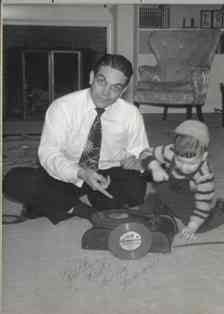
Warren Kelly & son Tim
As a teenager Tim became program director of WYSL in Buffalo and by the late 60�s was knocking on my door in Northridge to personally introduce himself and deliver an audition tape of his KTSA, San Antonio program. Shortly thereafter I invited him to join us at KTLK-Denver where he met and married Evelyn. Blending their talents they gave a new generation a taste of Burns and Allen�but instead of George and Gracie, it was Tim and Ev.
WPGC in Washington and WRKO in Boston had seasoned them and I looked forward to their arrival in Los Angeles where they houseguest with me in those early days.
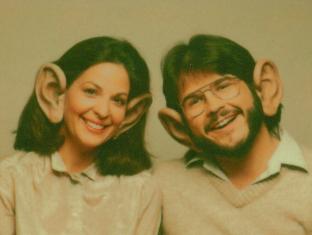
�We have an ear for hit music� � Tim & Ev on KFI (1978)
In the years ahead they would excitedly tell me of their new brainstorm, a syndication company for radio programming. I warned them of the consequences of competing against the giants already filling that need, but they didn�t listen. Instead their combined effort and a $15,000 investment gave birth to a $100 million dollar company called Premiere Radio Networks.
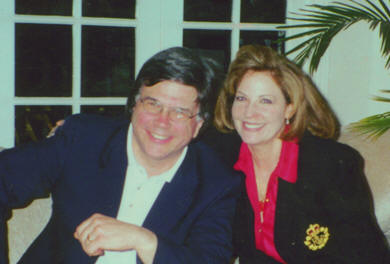
Tim & Ev Kelly today
The Kelly's are close friends of three decades. I kid Tim reminding him, had I not hired him in Denver he would have never met KTLK's receptionist.....Ev.
One of my consulting clients, KDON in Salinas, California, was the birthplace of a brilliant new morning team, �Byron and Tanaka�. The stations manager, Ed Lubin and I worked together at KQV in Pittsburgh where he was on the sales staff. It wasn�t long before Ed accepted a position with RKO radio and then would manage Pat Boone. I persuaded Byron & Tanaka to move from the Salinas FM to KROY-AM in Sacramento where station owner Ralph Guild had been attack by a competing station programmed by consulting guru Kent Burkhart. I hired the competing program director, Steve Rivers, away from Burkhart, added Byron and Tanaka in the morning and it was all over but the shouting as KROY once again dominated the Sacramento radio ratings. In time my long time friend from Pittsburgh days, John Tenaglia, was in need of a program director and a morning show at his WIFI-Philadelphia. Rivers, Byron & Tanaka filled the bill until now when I needed an afternoon team for KFI � enter Byron & Tanaka.
I called Charley Fox �the velvet cooker�. Few on air talents could rock with as much class as �the Fox�. Following stints at CKLW and WRKO, Charley gave KFI a solid #1 audience in his late evening time period. Eric Chase from San Francisco�s KFRC and Mark Taylor from the bay area�s KYA joined us, almost every member of our talent line up had also been a successful program director. Understanding the �mass appeal� guidelines, they made it easy for me.
Bob Shannon Mark Taylor Paul Kirby
Paul Kirby, former program director of WCFL and WRKO brought his production talents aboard and Roger Collins, a very successful program director of a consulting client of mine, Lotus Communications, joined KFI as our music director. Paul was destined to become one of the nation�s most respected voice over talents, an accomplished actor and another friend of three decades.
The recording industry was delighted offering KFI plenty of opportunity for contact with artists Our giant signal broke dozens of hits with more than fifty gold records awarded to KFI for leading the way. Superstar recording artists, Kenny Rogers, Tom Jones, John Lennon & Dolly Parton found our doorway thanking us for the airplay. Neither rock nor country programmers were interested in Kenny. It had been a long time since his days with The First Edition, so he came to KFI asking for airplay on a song called "Lucille". He honored me with a beautiful gold plated million dollar check for our efforts. No, I've never attempted to cash it.
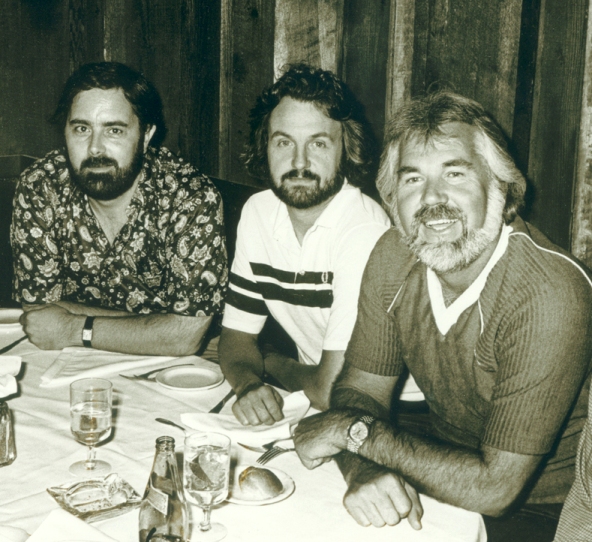
John Rook Roger Collins Kenny Rogers
Aiming KFI at a younger audience without bringing the wrath of the home office down on us took some doing. In the early days Biggie crossed his fingers for luck each time he reminded me how important it was to have improved ratings under our belt before word reached Atlanta KFI had been reduced to the level of a lowly rock n� roll radio station. As always I tried to stock the station with air talent that were different, even unusual. 64/KFI began to take on the personality I was hoping for, it was fun to listen to and the ratings proved I wasn�t the only one doing it.
As luck would have it the ratings arrived and showed a major improvement for KFI on the very same day Stanley Mouse, the big honcho from the home office arrived in town.
Mouse had moved to the head of Cox Radio from years of success in Ohio. A loud boisterous man, he had obviously soaked up some alcohol during lunch and arriving at my office door bellowing for all to hear, �What the hell have to you done to this station?�
His slurred, ranting tirade brought an embarrassed Jim Wesley, who led his boss away to �Pauley Pavilion�. It didn�t matter though from that day on I was ridiculed by Stanley Mouse at every opportunity. One especially unprofessional episode clouded a major management meeting in Atlanta, where I was singled out in the presence of the entire Cox radio management team as the person who single handedly destroyed KFI. While later Wesley and other Cox managers quietly apologized for their boss, Stanley Mouse had no appreciation for John Rook. However, at a later company get together at Hilton Head, he told me privately how much he actually appreciated my efforts. Mouse would be difficult for me to understand, but I wasn�t interested in being his public pin cushion. I always would have a difficult time accepting those who attempted to communicate under the haze of alcohol.
I never felt comfortable joining the guys at the end of the day at the local watering hole. A glass of wine with a steak dinner satisfied my need for alcohol. KFI�s sales manager, �the Duck,� imbibed regularly and often invited me to join him for a drink. I grew tired of searching for an excuse and finally explained I never found comfort sitting in a bar, �that�s sad,� he said, �that�s real sad.� It would be a meeting in a bar initiated by the Duck that introduced me to my final days at KFI.
Jim Wesley would ride the crest of KFI�s success returning him to his beloved Georgia as president of Cox Radio. On the day I was hired at KFI, explaining his own future following a less than successful track record Wesley advised "I still have a few coupons I can clip". Programming created a giant increase in revenue for KFI, Wesley no longer had to count those "coupons".
Recently, the pain that plagued Rush Limbaugh made headlines.
Pain also played a major role in my life, with morphine and a lifetime of
medication providing little relief. The medication added its own side effects
and only the modern breakthrough of non-evasive laser surgery finally
ended my suffering. I remind myself daily of the hell I recently escaped
and I certainly understand the actions Rush felt compelled to take to escape
similar back and leg pain.
My extreme back pain kept me bedridden from time to time. But Biggie Nevins, Paul Kirby and Roger Collins were excellent backup quarterbacks that made my job easier, we thought as one.
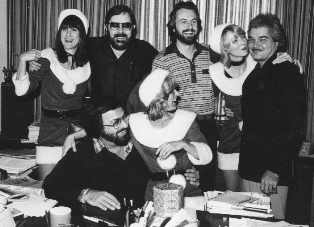
Biggie Nevins, (standing) John Rook, Roger Collins, Joe Isgro with Santa's helpers.
Rick Dees was a top rated DJ in Memphis and his �Disco Duck� single was #1 worldwide when Stanley Mouse called and said he could deliver Rick to KFI �if you want to get rid of those guys in the morning.�
I was surprised Mouse even knew about Rick Dees, but horrified he thought I would actually consider replacing Lohman and Barkley whose ratings were at an all-time career high.
�Yeah, but you could save on payroll with Dees,� taunted Mouse. �He wants to get to Los Angeles in the worst way.�
I countered by suggesting Rick for KFI�s afternoon slot. He wasn�t interested and soon made his California debut doing mornings on a dying KHJ.

What PD wouldn't have enjoyed working with Rick. Spotting him on the street one day preparing a �bit� for his morning show, I hurriedly found a parking place and walked several blocks to where he was located introducing myself and let him know how much I appreciated his hard work. �Keep that up and you�ll be on top in this town�, I said, without realizing how prophetic my remark would be. In a business not known for longevity, Ricks been a favorite with Californians for almost three decades.
"El Chasero" or Eric Chase, had a good ear for picking the hits. One of his picks gave Natalie Cole a much needed boost in establishing Nat's daughter as a star in her own right.
.jpg)
Having met her father, Nat "King" Cole a dozen years earlier during my KQV days, it was my pleasure to "break" Natalie Cole's top ten national hit "Our Love" in 1978. Another gold record award from Capitol's Steve Meyer, John Rook, Capitol's Susan Schraf, KFI's Eric Chase and Capitol Vice President Bruce Wendell.
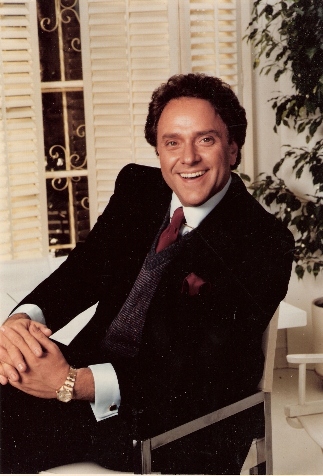
Neil Bogart
Neal Bogart, of Casablanca records had been one of my closest friends for years. At a young age Neal made major contributions in the recording industry. His insight was especially valuable in reminding me of the importance of programming a variety of content.
The memory of Neal enthusiastically selling the concept of three guys dressed in clown suits playing hard rock music is still with me. I bet against KISS being anything more than a one night stand. A few years later that rock band hit with a ballad called �Beth� that would propel the �clowns� to three decades of success. With that experience still in my mind, Neal showed up with a tape of a group he explained would be dressed in feathers and leather called the Village People. He disliked the name �bubblegum king�, insisting his introduction of the genre was nothing more than providing radio with some fun, happy programming.
Neal�s talent finds were always unusual, often sharing them with me from their inception. So it was on the night he excitedly played a tape of a new comedian he had discovered in San Francisco. The recording of a nightclub appearance by an unknown Robin Williams was funny, but nothing I would have considered for airplay on KFI. His face turning to a frown, Bogart paused for a moment before almost casually saying, �Oh by the way, I�m suing you and your station for 26 million�. It almost got by me in a haze of smoke in the back of that limo. �You what�? I shouted, my face etched in horror.
A month earlier, Bogart�s disco queen, Donna Summer was sitting on the top of the best selling album charts with multiple hits from an album containing �Love to love you baby�, �I Feel Love�, �Last Dance� and a remake of the Richard Harris classic, �MacArthur Park�. No new releases were planned until summer, several months away.
By taking attention away from her current album, Bogart explained KFI had robbed Donna Summer of millions of dollars in sales on her current album.
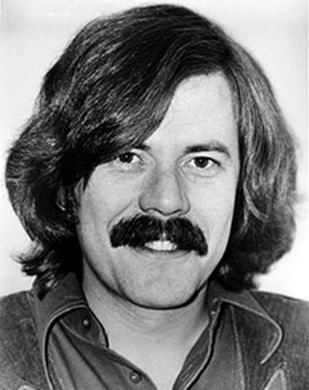
Eric Chase
It seems that Eric Chase, had even better contacts than I did at Casablanca, as he casually strolled into my office dropping a tape cassette on my desk - �here�s the new Donna Summer� he stated with a mischievous smile on his face.
As was my usual practice when handed such a gift, we waited until the close of business on Friday before airing a �world exclusive�. By making a weekend promotion out of our good fortune we escaped any cease and desist request from record companies and lawyers alike until the following Monday. In this case we were even more fortunate that a Jewish holiday fell on Monday, giving us an additional day of fun.
Previously, Bogart had congratulated me on KFI�s airing of world premieres by the Eagles and the Bee Gee�s. He took a totally different view when a leaked release came from his own company.
On Tuesday morning, Bogart telephoned. �Rook, what the hell have you done to me�, he ranted, dismissing my hesitant answer, he shouted, �take it off the f�king radio�NOW!� Complying with his directive, I thought it was all over and we had even attended a Lakers game together�.until this moment in the back of that limo.
Bogart explained that Casablanca was being sued by Donna Summer for �my giving you a damn tape I know nothing about�. �She�s claiming a like amount in damages� he said as he asked how I got the tape. I didn�t know where Chase scored the recording and would not have said if I did. Crossing his fingers Bogart said - �Kings X�, signaling it was time to forget the problem at hand and enjoy the night. It was difficult for me to do as I tried to think of a way to explain to Cox communications� how I had gotten them into a multi million dollar law suit. It was after midnight that I telephoned Biggie to prepare him for what was coming. Awakening him from sleep, I explained �we�ve got a 26 million dollar lawsuit�. �Will they trade it out�, he asked. I slept a little better but not much.
Under the questioning of Jim Wesley, Eric did finally provide the information Bogart needed to satisfy Donna Summer the leak had not come from him and the lawsuit was withdrawn.
A few weeks later � HOT STUFF was rush released ahead of schedule and became the year�s top summer hit.
Bogart was one of my favorite people, as a record man he was a genius and he never forgot our friendship that began in the mid 60's when he was a promotion man for Cameo Parkway and I was program director of KQV.
We talked regularly and I always enjoyed his invitation to join him at his floor level seats at Lakers games. "Hey man, you ready for the game tonight?" he would ask in an afternoon telephone call. "Sure I said"...as I prepared to make the trip from Northridge to "The Forum" via a limo he would always send for me.
Little did I realize how limited my time would be with my friend Neil as he asked me during half time of a Laker game "John what would you really like to do with the rest of your life?" Replying that I would like to have a small horse ranch near a small town where I actually owned a radio station, Neil said..."Well do it damn it John....who knows how much more time we have in our lives".
It would be during that game that Neil leaned over to say, "John, you know I love you don't you?" "Of course I replied", as I wondered why my friend chose that moment to tell me.
A few weeks later, Neil would be gone...dead from cancer.
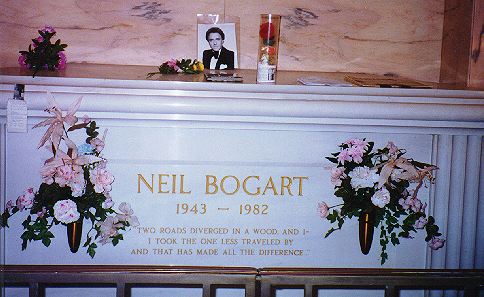
I have thought of him often in the years since and taking his advice, I did began my search for that small town with my " little sliver of paradise" in north Idaho.
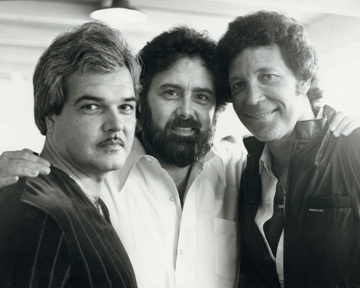
Joe Isgro John Rook Tom Jones
It had been 15 years since I first met Tom Jones in Pittsburgh, I was delighted when he agreed to head up our March of Dimes promotion.
The home office in Atlanta sent an Equal Opportunity spokesman to inform us of new company guidelines. He made it clear any future employees must come from minority groups. Prior to his visit I had already hired Doug Banks who joined KFI coming from Kansas City. He was an exceptionally gifted talent that I had high hopes of becoming a long time KFI fixture. Unfortunately within weeks of his arrival he received an offer from Chicago that I actually encouraged him to take. Doug Banks would prove my talent compass correct as he became one of the nations top morning talents via his radio network program.
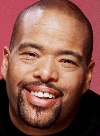
Doug Banks
Our sales manager annoyed Biggie and I when he complained of having to hire minorities. �It was a slap in the face� according to the Duck that the messenger from the home office was black himself.
It wasn�t the only time the Duck dropped by my office with an off color joke or racial remark following a midday nip at a favorite watering hole. On more than one occasion he went too far. On one instance, my friend Neil telephoned and offered me his courtside seats to a Lakers game at the Forum and suggested I invite my sister�s two sons, Troy and Roy to the game as well. Multi-racial, the boys grew up playing with David and Clifford at our Northridge home.
On the day of the game, Troy, Roy met I met at KFI and as we waited for an office elevator the Duck approached, leaned to my ear and in an alcoholic whisper asked, �Hey Rook, who are the jungle bunnies?� Both boys pretended not to hear as I frowned in obvious disapproval and introduced both boys as my nephews and explained we were on our way to the Lakers game.
�Really?� stammered the Duck as he reached out to pat Troy�s Afro, �That�s the place for �em.�
Once inside my car, I apologized to my nephews. �That�s alright, Uncle John, we�ve heard it before� said Troy.
The following morning I made one of my rare visits to the Ducks office on the second floor. Walking in unannounced, I closed the door behind me and informed him with as much civility as I could muster that I didn�t appreciate his drunken appearance and embarrassing racial comments the previous afternoon. He laughingly excused himself and added, �Aw man, you just took it the wrong way�. Adding - �are they really yours?�
Besides a general manager and a sales manager, KFI also had a business manager, who wore the stripes of an accountant but little more. Our business manager patrolled the halls like a sheriff and looked for employee lawbreakers. Biggie referred to him as �the Squire,� as it rhymed with his name. Somehow the Squire appointed himself as chief magistrate who silently lurked outside an office door to gather information on behalf of the company.
His charges required me to represent the accused before �Judge Wesley� in his Pauley Pavilion chambers. On one such occasion, Biggie tipped, �Squire says we have a thief among us.�
As Wesley�s secretary announced my arrival, she opened the door to Pauley Pavilion where my eyes adjusted to the dimly lit chambers. �Judge Wesley� was seated behind his desk and Squire stood along side, sporting the smile of a victorious prosecutor.
�Biggie says we have a thief,� I began.
Squire interrupted, �I caught one of your guy�s red handed.�
�What was stolen?� I asked.
Prosecutor Squire and Judge Wesley glanced at each other before saying in unison, �Toilet Paper!�
In disbelief I questioned, �Toilet Paper?�
Squire had witnessed the theft saying he personally saw Bob Shannon departing the station with several packages of toilet paper under his arm.
Was I on Candid Camera, I wondered? Promising to solve the �toilet paper caper� and returned with my findings within the hour.
Prosecutor Squires� smile reversed to a frown and his face turned crimson red as I explained Bob Shannon certainly was not a thief as charged, but had merely taken home a sample of a product given to him by an advertiser hoping to demonstrate its �softness� to their spokesman on the radio.
Case dismissed! I shook my head in disbelief walking from the chambers.
On another occasion, the Squire took up the role of DEA agent. Charging one of our all American talents was scampering up a fire escape to the top of the building to �do drugs up on the roof.� He surmised this happened during a three-minute newscast break and I questioned what kind of drug he thought was involved.
�Whatever can be done in three minutes,� was the reply.
�Do you have any evidence?� I asked.
�What should we look for?� quizzed Squire.
�Not guilty!� I said walking from the �proceedings.�
_________________________________________________________
Entering my seventh year at KFI a happy but disappointed Biggie learned his longtime boss and friend Wesley had been named president of the company and �the Duck� was being named manager. Biggie predicted the upheaval about to take place. �People like him want to make changes,� he said, �It�s a power trip�.
I was surprised Jim Wesley would depart for Atlanta without offering a word of thanks for helping him achieve his goal. His amiable management style was gone and a successor seemed picked only for his ability to continue the revenue stream.
Within hours of Wesley�s departure I received a telephone call from �the Duck.� He ordered me to immediately meet him at his favorite bar. I arrived finding him holding court, celebrating his having been named king. Slurring my introduction to his party goers, he placed his arm around my shoulder, proclaiming, �He�s the greatest program director in the world.� Then leaning toward me he mumbled, �And you�re gonna� get rid of f--king Biggie Nevins.�
I pretended to not understand as the Duck began to explain how my firing Biggie would reward me with an increase in salary. �You gotta be kidding, he�s as much as part of KFI�s success as I am.
�If that�s true, how come it didn�t happen til� you arrived?� he quizzed.
�Get rid of the fat bastard,� said my new boss as I turned to depart, hoping it was alcohol talking and not �the Duck�.
He had not yet moved into the vacant office of Wesley, but on the following morning I could see the Duck certainly had found his manager�s stripes as this time sober, he reminded me again of �the Nevins problem.� �Biggie is not a problem, he�s an asset� I said refusing to even consider his termination.
�Then you are not my man, John,� he said rising from behind his desk and walking from his office. Sitting alone for a few minutes, I begin to realize the meeting had apparently ended. I couldn�t face Biggie, not on that day anyway as I proceeded to my car and the hour long drive to my home. I remember thinking I should telephone Jim Wesley in Atlanta, surely he would not approve of the Duck�s direction. He and Biggie had been a team at Cox for many years.
My home telephone was ringing as I entered the door.
�What the hell did you say to the Duck?� asked Biggie. �He just told me, he fired you.�
After seven years at KFI, one of my favorite chapters in life had ended.
It would also end for Biggie as he too was terminated. We talked often in the days following our departure from KFI. He and his wife Linda had begun construction on a new home in the hills above Malibu prior to his termination and now had just a few thousand dollars in the bank. His heart was broken realizing his dream home must now be sold. I offered some encouragement, �Reader Radio�, a project we hatched on the beach at Malibu was receiving interest from the owners of Lorimar. Prior to books being made available on cassette, we envisioned a format where top selling books were read on-air, not unlike playing the top selling hit records. Never to become a reality, the concept was dropped when Biggie died of a massive heart attack within ten minutes of a phone call to me on June 16, 1983.
Within an hour of Biggies death, Jim Wesley called from Atlanta.
�John, tell me what happened to Biggie.�
Anger welled up inside of me as I shouted, �You killed him you son of a bitch.�
The words I said on that day took years to erase before Jim Wesley and I again would communicate. However, I found it very difficult to accept how Biggie, Lohman and Barkley, myself and so many others were treated after having made major contributions to the success of KFI.
Within six months ratings and revenue for KFI began to change. I�d witnessed it before, a downward tumble in ratings ushering in over commercialization in a vain attempt to meet revenue goals. Soon even Lohman and Barkley were gone with KFI returning to the talk format abandoned years earlier. Attacking KABC, who was locked into long stretches of Dodger games and talk, KFI used unconventional antics not unlike the challenges of early top forty radio battles.
The station Cox �overpaid� for thirty years earlier, would become a giant cash cow for Clear Channel in the nations most lucrative radio market.
Humor was a big part of Biggies life and so it was in his passing. He missed his final services in New York � his ashes were mis-shipped to Milwaukee.
I would soon be leaving California for Coeur d'Alene, Idaho and what will become "my own little piece of paradise"

In the months that followed my departure from KFI a decision was made to change formats. With the change came a new program director and a terrible tragedy as reported in the southern California Daily Breeze.
KFI's recent jump to No. 1 a victory for AM stations
Friday, August 4, 2023
KFI began broadcasting in 1922 when Earle C. Anthony built a 50-watt transmitter on a breadboard. In 1931, the station began broadcasting with 50,000 watts.
At one time, KFI was the local affiliate for Dodgers baseball, broadcasting games throughout the western United States and Hawaii until the team left for KABC (790 AM) and a network of stations in 1972.
The station played essentially top-40 music in the 1960s, but began a transition to "full service" in the early 1970s, with a focus on talk. After the Dodgers left, KFI found itself with an aging audience that wasn't appealing to advertisers. So the decision was made to hire John Rook, who took the station back to top-40 in 1976.
Rook's Hit Parade Radio format was an immediate success, and KFI became what competitor KHJ (930 AM) had once been: fun, interesting, and a musical force with many exclusive hit song premieres. When Rook left in 1982, the station held on to its success for a time, though a softer music list began a ratings decline.
In 1986, everything hit the fan. The longtime morning team of Al Lohman and Roger Barkley split up. And Bruce Wayne, longtime KFI traffic reporter "K-F-Eye in the sky," died in a plane crash the same day station manager Don Dalton died from a brain aneurysm.
All of that combined to take KFI, a 50,000-watt clear-channel station -- the most powerful station in America -- to a ratings low. The summer 1986 ratings share was 1.2.
Something had to be done. In 1988, the decision was made to go talk, and the station began the slow transition. It was a risky move, considering how long it traditionally takes for a station to make it big in the format.
Up its sleeve, though, KFI had Rush Limbaugh, who began syndicating his program in August of that year.
So popular was Limbaugh that for much of KFI's early talk format, he carried the station. Other day parts were marginal in the ratings, but Limbaugh was big almost immediately, helping KFI gained credibility in the format.
Slowly, KFI increased its share of the ratings. And while the obvious casualty was KABC, KFI's news department was able to take listeners away from KNX (1070 AM) and KFWB (980 AM).
Today, KFI's schedule is as solid as that of any station.
It must be remembered that success wasn't overnight.
Indeed, the early days of talk on KFI garnered low ratings -- the station ended its first year of talk in the low 1-share range.
But ratings began an upward trend soon after.
All Content on this Web site �
2010 John H. Rook
All Rights Reserved